TAGS

ASSEMBLY (18) RESEARCH (17) HUMAN (15) CULTURE (14) HISTORY (14) URBAN (14) MATERIAL (13) ANTHROPOLOGY (12) COLOR (10) CONSTRUCTION (10) FRAMES (10) PROCESS (9) OBJECTS (8) CITY (7) MYTHOLOGY (7) PHOTOGRAPH (7) XENOTOPIA (7) GREEN DESIGN (6) CHANGE (5) PAINT (5) SPACE (5) ANATOMY (4) HORTICULTURE (4) MYSTICISM (4) PUBLIC (4) CONCRETE (3) GREEN (3) LIGHTING (3) ORGANIC FOOD (3) RELIGION (3) SUSTAINABILITY (3) AIRBRUSH (2) CAFE (2) COMPLETE (2) COOKING (2) TEST (2) VIDEO (2) ENERGY CODE (1) INK (1) NYCECC (1) OPINION (1) STREET (1) WHITE (1) andTRADITION (1)

SEARCH GREY OFFICE

Showing posts with label HISTORY. Show all posts

Time (2017)

'NOW do I die and disappear,' wouldst thou say, 'and in a moment I am nothing.  Souls are as mortal as bodies.   
But the plexus of causes returners in which I am intertwined, - it will again create me!  I myself pertain to the causes of the eternal return.  
I come again with this sun, with this earth, with this eagle, with this serpent - not to a new life, or a better life, or a similar life: 
- I come again eternally to this identical and selfsame life, in its greatest and its smallest, to teach again the eternal return of all things."

- The animals to Zarathustra.  Thus Sprak Zarathustra.  Freidrich Nietzsche.


"time"
18" x 30", oil paint on canvas, 2017

detail: pendulum bob

 inscription detail.
'in the beginning, there was darkness

detail


Now the earth was formless and empty, darkness was over the surface of the deep, and the Spirit of God was hovering over the waters.
Genesis 1:2


study sketches


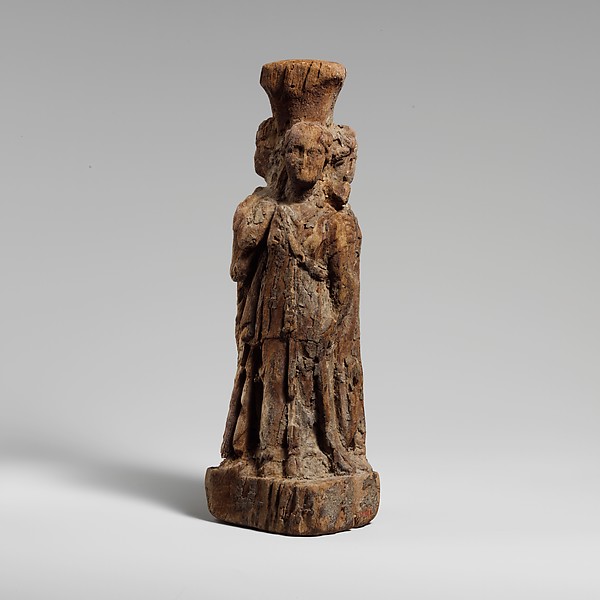
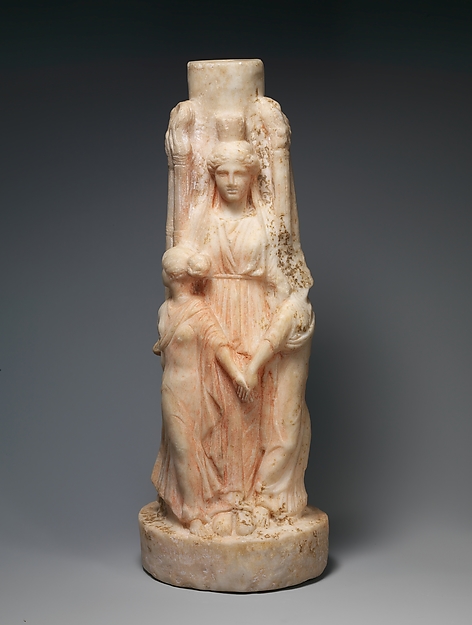
Hekate - research


Wood statuette of Hekate
Period: Hellenistic
Date: 304–30 B.C.
Culture: Egyptian, Ptolemaic
Medium: Wood, Juniper
Dimensions: H.: 9 3/16 in. (23.4 cm)
Classification: Miscellaneous-Wood
Source: Metropolitan Museum of Art, New York


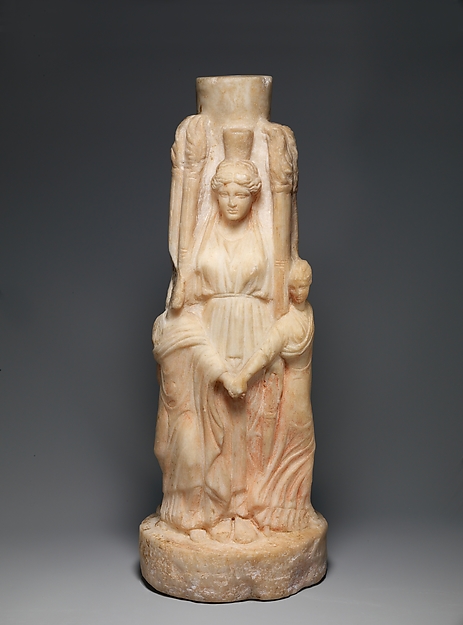
Marble statuette of triple-bodied Hekate and the three Graces
Period: Late Hellenistic

Date: 1st–2nd century A.D.
Culture: Roman
Medium: Marble
Dimensions: H. 12 in. (30.5 cm)
Classification: Stone Sculpture
Source: Metropolitan Museum of Art, New York


Hekate, Goddess of Darkness, from the Goddesses of the Greeks and Romans series 
(N188) issued by Wm. S. Kimball & Co.
Publisher: Issued by William S. Kimball & Company
Lithographer: Lithography by Ketterlinus Lithography Company (Philadelphia, Pennsylvania)
Date:1889

Medium: Commercial color lithograph
Dimensions: Sheet: 2 3/4 × 1 1/2 in. (7 × 3.8 cm)
Classifications: Prints, Ephemera
Source: Metropolitan Museum of Art, New York


Hecate, or The Night of Enitharmon's Joy
Artist: William Blake
Year: 1795
Type: Pen and ink with watercolour on paper
Dimensions: 44 cm × 58 cm (17.32 in × 22.83 in)
Source: Tate Gallery, London

META MEDITATIONS ( #_ of _ )

OBELISK

Obelisk study, G/O, 2015


Raising up the obelisk in St. Peter's Square, Rome. 1586.  drawing via Google search


Raising up the obelisk in St. Peter's Square, Rome. 1586.  drawing via Google search


Obelisk in the gardens adjacent to the Villa Medici in Rome

MYSTICISMS I

THE postulate of the self-preservative instincts we ascribe to every living being stands in remarkable contrast to the supposition that the whole life of instinct serves the one end of bringing about death.  The theoretic significance of the instincts of self-preservation, power and self-assertion, shrinks to nothing, seen in this light; they are part-instincts designed to secure the path do death peculiar to the organism and to ward off possibilities of return to the inorganic other than the immanent ones, but the enigmatic struggle of the organism to maintain itself in spite of all the world, a struggle that cannot be brought into connection with anything else, disappears.  
- Frued, Sigmund.  Beyond the Pleasure Principle.  Chapter V, p 36; C.J.M. Hubcap ,translation; (c) 2006, 1920


Space:

The Final Frontier
(2012-present)

Light in the Void, 2015


The Origin of Species (study), 2014

The Shadows of the Sun on the Landscape, 2015

ANTHROPOLOGY: SWIMMING


SWIMMING HOLE

Puglia, Italy
Used since early-Roman era (~100BC)


The ocular hole is carved through thousands of years of tidal erosion.


The water is cold, but calm.


The stone at the surface has an incredible weathered pattern.