TAGS

ASSEMBLY (18) RESEARCH (17) HUMAN (15) CULTURE (14) HISTORY (14) URBAN (14) MATERIAL (13) ANTHROPOLOGY (12) COLOR (10) CONSTRUCTION (10) FRAMES (10) PROCESS (9) OBJECTS (8) CITY (7) MYTHOLOGY (7) PHOTOGRAPH (7) XENOTOPIA (7) GREEN DESIGN (6) CHANGE (5) PAINT (5) SPACE (5) ANATOMY (4) HORTICULTURE (4) MYSTICISM (4) PUBLIC (4) CONCRETE (3) GREEN (3) LIGHTING (3) ORGANIC FOOD (3) RELIGION (3) SUSTAINABILITY (3) AIRBRUSH (2) CAFE (2) COMPLETE (2) COOKING (2) TEST (2) VIDEO (2) ENERGY CODE (1) INK (1) NYCECC (1) OPINION (1) STREET (1) WHITE (1) andTRADITION (1)

SEARCH GREY OFFICE

Showing posts with label ART. Show all posts

Time (2017)

'NOW do I die and disappear,' wouldst thou say, 'and in a moment I am nothing.  Souls are as mortal as bodies.   
But the plexus of causes returners in which I am intertwined, - it will again create me!  I myself pertain to the causes of the eternal return.  
I come again with this sun, with this earth, with this eagle, with this serpent - not to a new life, or a better life, or a similar life: 
- I come again eternally to this identical and selfsame life, in its greatest and its smallest, to teach again the eternal return of all things."

- The animals to Zarathustra.  Thus Sprak Zarathustra.  Freidrich Nietzsche.


"time"
18" x 30", oil paint on canvas, 2017

detail: pendulum bob

 inscription detail.
'in the beginning, there was darkness

detail


Now the earth was formless and empty, darkness was over the surface of the deep, and the Spirit of God was hovering over the waters.
Genesis 1:2


study sketches


elements

The Arts

24" x 36", Pencil, 2017

The Fruit

24" x 36", Pencil, 2017

MYTHOLOGIES: Text-ures

EDITORIAL

Mythologies
1.1

Stories are told to each generation.  These stories are passed from father to son, pastor to partitioners, troubadours to the stationary, friend to friend, community to community.

Each contains a vision of the world.  Visions that share elements of truth and fiction.  Structural elements and characters have changed names, forms, and moralities.

There are many scholars, more studied that I, who have analyzed why culture developed mythology; and this is a blog, not a dissertation.

My understanding is that we develop mythologies to explain the world.  (Most) ancient Greeks did not believe that there was a literal person tossing lightening during a storm.  Zeus myths go towards explaining the world in which they lived.  These tales provided folks a way to rationalize their world, to create a culture.  Stories are told between people, and these shared stories make up the fundamental attributes of culture, and this should never be underestimated.


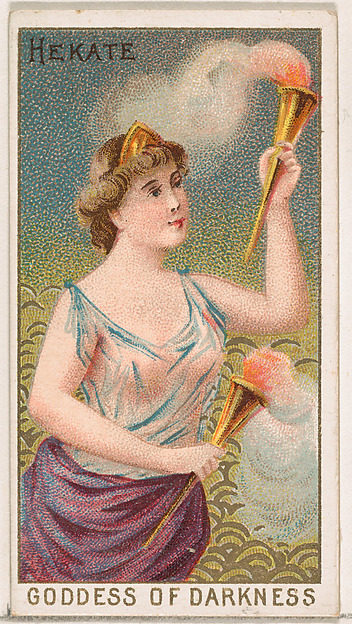
Hekate - research


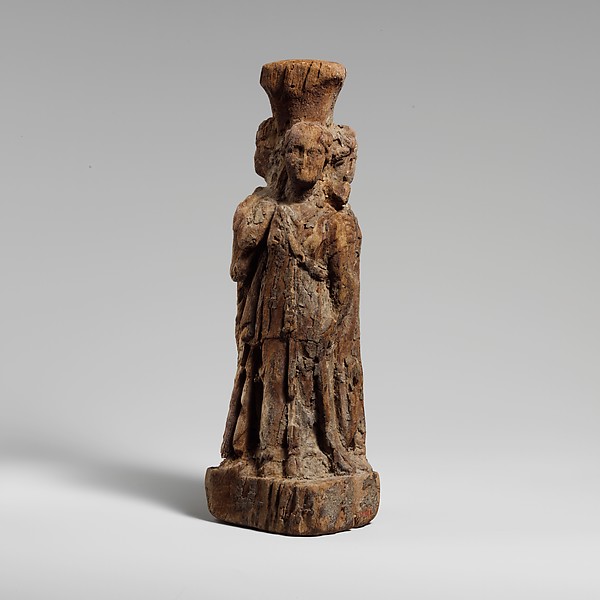
Wood statuette of Hekate
Period: Hellenistic
Date: 304–30 B.C.
Culture: Egyptian, Ptolemaic
Medium: Wood, Juniper
Dimensions: H.: 9 3/16 in. (23.4 cm)
Classification: Miscellaneous-Wood
Source: Metropolitan Museum of Art, New York


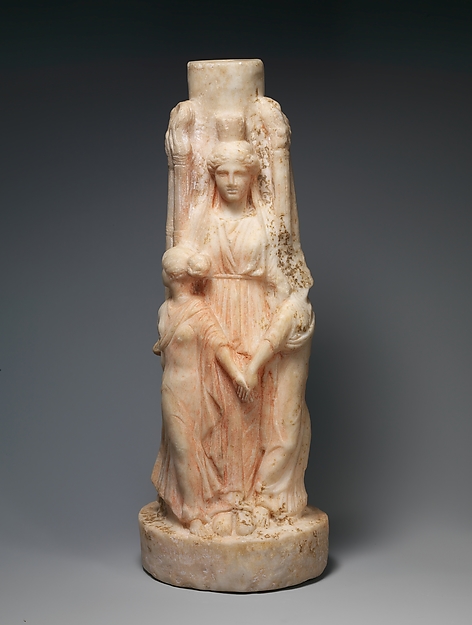
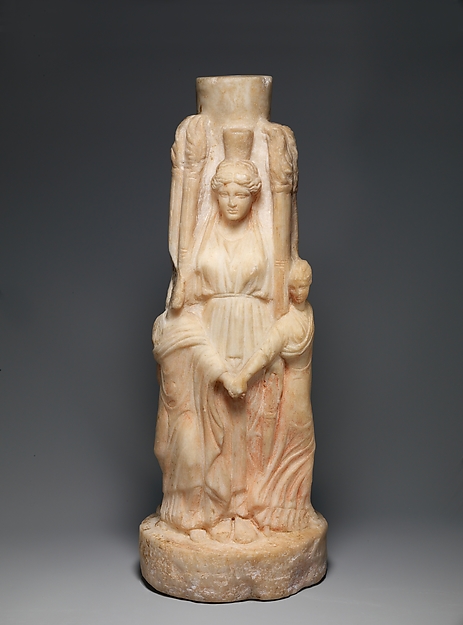
Marble statuette of triple-bodied Hekate and the three Graces
Period: Late Hellenistic

Date: 1st–2nd century A.D.
Culture: Roman
Medium: Marble
Dimensions: H. 12 in. (30.5 cm)
Classification: Stone Sculpture
Source: Metropolitan Museum of Art, New York


Hekate, Goddess of Darkness, from the Goddesses of the Greeks and Romans series 
(N188) issued by Wm. S. Kimball & Co.
Publisher: Issued by William S. Kimball & Company
Lithographer: Lithography by Ketterlinus Lithography Company (Philadelphia, Pennsylvania)
Date:1889

Medium: Commercial color lithograph
Dimensions: Sheet: 2 3/4 × 1 1/2 in. (7 × 3.8 cm)
Classifications: Prints, Ephemera
Source: Metropolitan Museum of Art, New York


Hecate, or The Night of Enitharmon's Joy
Artist: William Blake
Year: 1795
Type: Pen and ink with watercolour on paper
Dimensions: 44 cm × 58 cm (17.32 in × 22.83 in)
Source: Tate Gallery, London

remember Hogarth

remember Hogarth

colored pencil on matte paper, 24" x 36", 2016

DRAWINGS: Galaxy

night waves
19:6, 36 inches long, oil pastel, 2016


night waves
detail

BRIGHT CENTER-FARTHEST FROM


If there's a bright center to the universe, you're on the planet that it's farthest from.
- Luke Skywalker, Star Wars: Episode IV, LucasArts/FOX. 1977


When one body exerts a force on a second body, the second body simultaneously exerts a force equal in magnitude and opposite in direction on the first body.
- Isaac Newton, Philosophiæ Naturalis Principe Mathematica, 1687


Bright Center of the Universe, the Planet Farthest From
18x18 inches, oil pastel, 2016


Bright Center of the Universe, the Planet Farthest From
18x18 inches, oil pastel, 2016

FUTURES

We have no right to assume that any physical laws exist, or if they have existed up until now, that they will continue to exist in a similar manner in the future. 
-Max Planck


Staring at a screen, are we looking at the future?
Between the digital static and glow of diodes, do you see a pejorative trend, or a positive one?

These drawings are comprised of primary shapes, squares, circles, and diamonds.  In the vein of 70s conceptual artists, who like today, were staring at an ambiguous and contentious future, these shapes straddle the barriers between certainty and uncertainty.

The vicissitude between horizon and fissures is daily motivation; the past (trouble) behind and future (hope) ahead.  

In a world that is more certainly not flat, our ability to look to the future has not been enhanced by technology.  We still stumble through the darkness, limited by the range of our candle.


future
11x17 inches, oil pastel, 2016


future
11x17 inches, oil pastel, 2016

future
detail


future
24x36 inches, oil pastel, 2016


future
11x17 inches, oil pastel, 2016


future
detail


future
24x36 inches, oil pastel, 2016

future
24x36 inches, oil pastel, 2016


future
detail

DRAWING: This Too Shall Pass

Walking down the hall one afternoon, there was a moment I observed in which two men were standing on opposite sides of an opening.  Both men were leaning casually against the wall and both on cellular phones, deeply engaged in separate conversations, forming an ad hoc symmetry.  

My pathway to the office required me to pass between these individuals who stood like the Gates of Argonath, or with less erotic suspense, the gateway by Maria Abromovic.  

References aside, there was a palpable tension that stretched between these individuals; their digital connection to the outside, and framing of the hallway suggested that an invisible, but palpable tension stretched across the void.  

The drawings here are studies for an ongoing piece on the subject.  Titled, 'This too shall pass', the drawing examines the condition posed by these workers.  It looks to classical moments in architecture such as the caryatid, where figures frame and entry.  Within this framework, the drawing places a cellular phone, which is one of the most temporal items in contemporary culture.

The ubiquity of phones today guarantees nothing in terms of longevity.  Within a decade, perhaps two, the mobile phone as we know it is as likely to be a relic, consecrated to memory, much like dial up modems have become.


Figures are attenuated in a classical nude character.   Both characters are male, and recline slightly against the edge of the portal.


In the observed event, the portal was a hallway, ten feet wide, and unarticulated by molding or framing.  Replicating these conditions was not necessary for the piece, but finding the best proportion for the portal is important.  The sketch above illustrates several permutations of the portal.


All of the drawings above this line were done on an iPhone, using the sketch tool.  
Additional drawings below were done with analog tools (pencil, pen).

Art: PRIMARIES I

PRIMARIES, 1/3
Oil Pastel on paper, 24"X36"
2015

PRIMARIES, 2/3
Oil Pastel on paper, 24"X36"
2015

PRIMARIES, 3/3
Oil Pastel on paper, 24"X36"
2015

META MEDITATIONS ( #_ of _ )

OBELISK

Obelisk study, G/O, 2015


Raising up the obelisk in St. Peter's Square, Rome. 1586.  drawing via Google search


Raising up the obelisk in St. Peter's Square, Rome. 1586.  drawing via Google search


Obelisk in the gardens adjacent to the Villa Medici in Rome

DRAWING: Facade Paneling

Study Drawings 1

Facades

(2012)


Structured mouths, 2013

Eye socket, 2012


Two sides, 2013


DRAWING: Figure Studies

WARNING
some content may be considered explicit


DRAWING

Figure Studies
2015